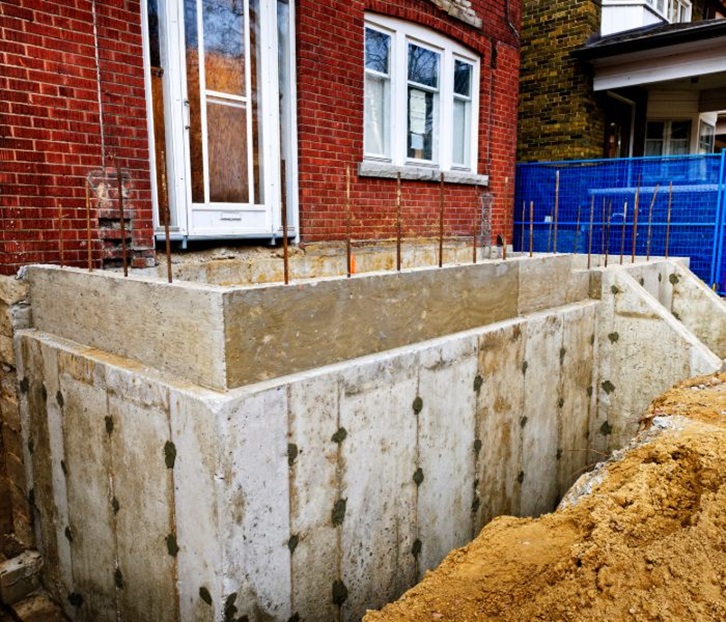
Your home’s foundation is crucial in maintaining its structural integrity and value. Over time, issues such as soil erosion, water damage, or natural settling can lead to foundation problems that, if left unaddressed, may compromise the safety and stability of your home. The good news is that various repair methods can tackle different types of foundation issues, restoring the structural soundness of your property. Below, we’ll explore the top five foundation repair methods, explaining how they work, when they’re most effective, and their pros and cons.
Factors to Consider When Choosing a Foundation Repair Method
Several factors come into play when selecting the right repair method for your home. A professional foundation inspection can assess the underlying issues and recommend the most suitable repair strategy.
- Severity of Damage: Minor settling or cracks may only require slab jacking or soil stabilization, while significant structural damage might necessitate piering or full replacement.
- Soil Conditions: Understanding the type of soil your home is built on is essential, as expansive or weak soils may require specific solutions like soil stabilization or deep piering.
- Cost and Time: While some methods, like slab jacking, are quick and affordable, others, like piering or replacement, may involve higher costs and longer timelines.
1. Slab Jacking
Slab jacking, also known as mudjacking, is a non-invasive technique used to lift and level sunken concrete slabs. This method involves drilling small holes into the slab and injecting a grout mixture underneath. The grout fills voids in the soil, raising the slab back to its original position and providing additional stability.
Best For: Sunken areas such as driveways, patios, garage floors, or smaller foundation sections. It is ideal for cases where soil erosion or compaction has caused uneven settling.
Advantages: Slab jacking is cost-effective and quick, typically completed in just a few hours. It doesn’t require heavy excavation, meaning minimal disruption to your property.
Limitations: This method is unsuitable for foundations experiencing extensive structural damage or severe soil instability. It is more of a surface-level solution and may not provide long-term stability in problematic soil conditions.
2. Piering (Underpinning)
Piering, also called underpinning, is one of the most commonly used foundation repair methods for stabilizing homes experiencing uneven settling. It involves installing steel or helical piers deep into the ground until they reach a stable layer of soil or bedrock. These piers serve as anchors to support and stabilize the foundation, preventing further movement.
For homeowners in areas like foundation repair Detroit MI, where soil conditions can lead to shifting or settling foundations, piering offers a reliable solution to restore the structural integrity of the home. By driving piers deep into the earth, this method ensures the foundation is stabilized on solid ground, preventing future damage and helping maintain the long-term stability of the property.
Best For: Homes with significant vertical movement or uneven settling caused by soil conditions. It is especially effective in clay-rich soils prone to shrinkage and expansion.
Advantages: Piering provides a durable and long-lasting solution to foundation settling. The deep anchors reach stable soil layers, ensuring your home remains secure over time.
Limitations: The installation process can be labor-intensive and expensive due to the specialized equipment and expertise required. While effective, it is not the fastest solution for addressing foundation issues.
3. Concrete Pressed Piling
Concrete-pressed piling is a cost-effective foundation repair technique used in regions where soil conditions cause frequent foundation movement. This method involves driving precast concrete cylinders into the ground using hydraulic pressure until they reach stable soil. The structure’s weight is then transferred onto these pilings, ensuring stability.
Best For: Homes with clay-rich soil or areas with frequent foundation movement due to expansive soil.
Advantages: Concrete pressed piling is a reliable, affordable solution with minimal disruption to your property during installation. It is effective for homes with moderate settling or shifting.
Limitations: This method may not be suitable for all soil types, especially those lacking the necessary load-bearing capacity. In some cases, additional support measures may be required to enhance stability.
4. Soil Stabilization
Soil stabilization is a preventative and corrective method that addresses foundation problems caused by weak or expansive soils. This method improves the soil’s load-bearing capacity and prevents further foundation damage.
Best for: Properties in regions with expansive clay, sandy soils, or weak soil layers that cause foundation instability.
Advantages: Soil stabilization strengthens the ground beneath your home, reducing the likelihood of future settling or shifting. It can be used alongside other foundation repair methods for added effectiveness.
Limitations: While it enhances soil strength, this method does not directly address structural damage to the foundation. It is most effective as a preventative rather than a standalone repair for significant foundation issues.
5. Foundation Replacement
A complete replacement may be necessary if the foundation is severely damaged or deteriorated. This process is typically a last resort when other repair methods cannot resolve the issue.
Best For: Homes with extensive foundation cracks, severe structural instability, or irreparable damage.
Advantages: A new foundation offers a permanent solution to your home’s structural problems, restoring its integrity and value. It is the most comprehensive repair method available.
Limitations: Foundation replacement is highly invasive, time-consuming, and expensive. It requires significant excavation and can disrupt the surrounding property. However, it provides long-term peace of mind for homeowners facing major structural issues.
Conclusion
Each foundation repair method has unique advantages and applications. Understanding the root cause of your foundation issues and addressing them promptly is essential for maintaining your home’s safety and stability. Whether you need a minor adjustment or a complete replacement, selecting the right solution can save you time, money, and stress in the long term.
Detroit Foundation Repair Pros offers expert solutions tailored to the unique foundation challenges homeowners in the Detroit area face. Their experienced team is dedicated to providing reliable and effective repairs, ensuring your home remains safe and secure for years.
